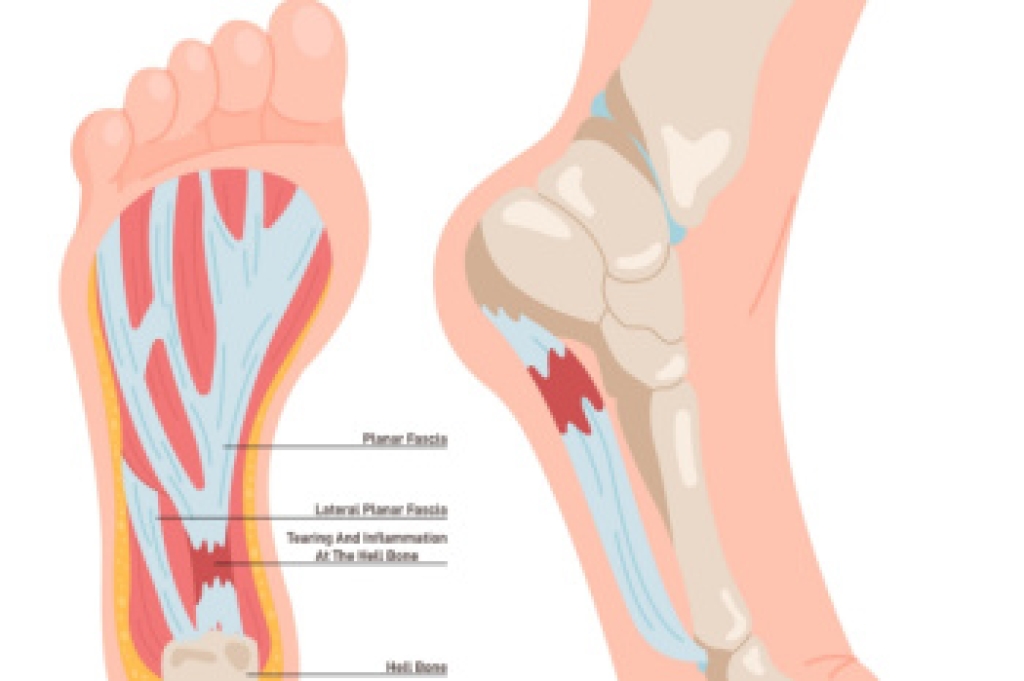
Sharp heel pain with the first steps out of bed is a familiar sign of plantar fasciitis. This condition affects the plantar fascia, a strong band of tissue that runs along the bottom of the foot. It connects the heel to the toes and supports the arch. Repeated strain irritates this tissue and contributes to small areas of damage, especially near its attachment to the heel bone. Pain usually develops beneath the heel, although discomfort sometimes extends into the arch. Symptoms frequently ease after a few minutes of movement, then return after prolonged standing or a busy day on the feet.
Several factors place extra stress on the plantar fascia. A sudden increase in running distance or long hours of standing puts repeated pressure on the heel. Tight calf muscles also increase tension through the bottom of the foot. Flat feet and high arches affect how the foot handles weight, while excess body weight adds to the load. Wearing shoes that lack proper support contributes to discomfort in some patients. Plantar fasciitis affects active people as well as those with less demanding routines. Persistent pain sometimes changes the way a person walks, placing additional strain on nearby joints and muscles.
A podiatrist evaluates heel pain by asking when symptoms began and which activities aggravate them. The examination includes checking tender areas, assessing ankle flexibility, and observing foot movement while walking. These findings help identify strain on the plantar fascia and distinguish it from other causes of heel pain. A stress fracture, for example, involves a small crack in the heel bone and requires a different treatment approach. Imaging tests are not always necessary, but a podiatrist orders tests when the diagnosis remains uncertain. Heel spurs sometimes appear on X-rays, yet their presence does not necessarily explain the pain or determine the treatment.
Treatment focuses on reducing strain and addressing the factors surrounding symptoms. A podiatrist prescribes custom orthotics when appropriate to improve support and redistribute pressure. Professional taping provides another way to support the arch. For selected patients, a prescribed night splint gently holds the foot in a position that limits tissue tightening. More persistent symptoms sometimes warrant a walking boot, an exercise plan, or other treatment to address the problem. Surgery is reserved for cases that do not improve with prolonged nonsurgical care. If you have symptoms of plantar fasciitis, it is suggested that you schedule an appointment with a podiatrist for a diagnosis and appropriate treatment.
Plantar fasciitis is a common foot condition that is often caused by a strain injury. If you are experiencing heel pain or symptoms of plantar fasciitis, contact one of our doctors from Andrea Hyperbaric Wound Care & Health Center. Our doctors can provide the care you need to keep you pain-free and on your feet.
What Is Plantar Fasciitis?
Plantar fasciitis is one of the most common causes of heel pain. The plantar fascia is a ligament that connects your heel to the front of your foot. When this ligament becomes inflamed, plantar fasciitis is the result. If you have plantar fasciitis you will have a stabbing pain that usually occurs with your first steps in the morning. As the day progresses and you walk around more, this pain will start to disappear, but it will return after long periods of standing or sitting.
What Causes Plantar Fasciitis?
- Excessive running
- Having high arches in your feet
- Other foot issues such as flat feet
- Pregnancy (due to the sudden weight gain)
- Being on your feet very often
There are some risk factors that may make you more likely to develop plantar fasciitis compared to others. The condition most commonly affects adults between the ages of 40 and 60. It also tends to affect people who are obese because the extra pounds result in extra stress being placed on the plantar fascia.
Prevention
- Take good care of your feet – Wear shoes that have good arch support and heel cushioning.
- Maintain a healthy weight
- If you are a runner, alternate running with other sports that won’t cause heel pain
There are a variety of treatment options available for plantar fasciitis along with the pain that accompanies it. Additionally, physical therapy is a very important component in the treatment process. It is important that you meet with your podiatrist to determine which treatment option is best for you.
If you have any questions, please feel free to contact our office located in Astoria, NY . We offer the newest diagnostic and treatment technologies for all your foot care needs.
